
IBM
PUBLIC RELATIONS | CONTENT STRATEGY | EXECUTIVE VISIBILITY

Challenge: With nationalism and tariffs dominating the cultural conversation, an argument for working closely with allies was a hard sell. On top of that, defence technology (AI, quantum-safe encryption) is abstract, and opinion editors rarely run technical pieces from consulting firms.
Solution: I found the human story inside a technical argument. Working from an IBM partner’s notes and a speech he’d given about his military service, I built an op-ed around two moments from his career in the field. In the first, he was thousands of kilometres from a soldier-recovery mission, yet newly deployed digital systems gave him real-time links to the assault teams on the ground. In the second, a boundary line on a map rubbed off in 50°C heat, revealing a gap that no one had been responsible for monitoring. Each story made an abstract idea concrete: the first showed why decision speed matters, the second why systems that can’t talk to each other put missions at risk. That turned a case for AI and quantum-safe defence into something readers could picture, and we placed it in the opinion section of the Toronto Star.
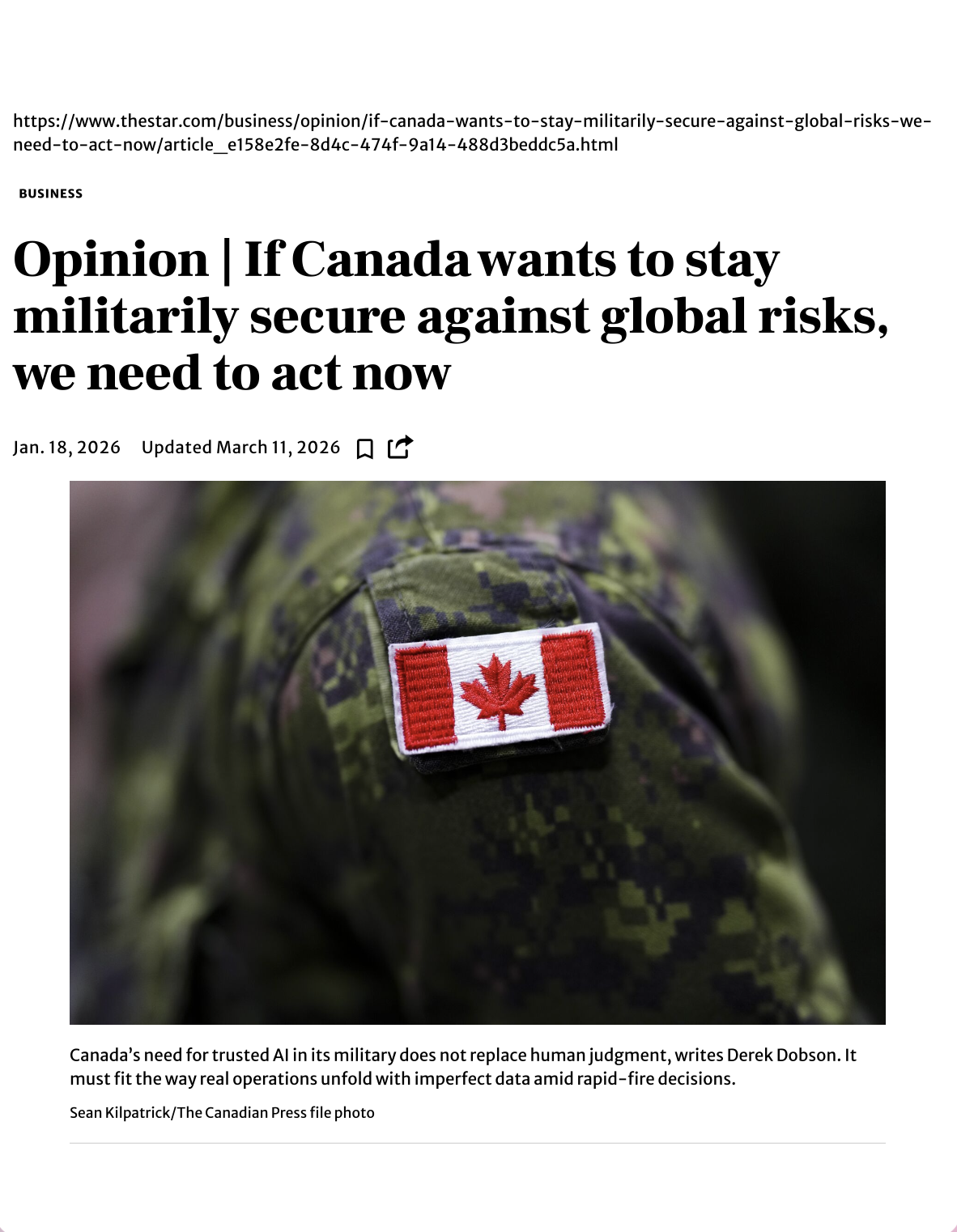
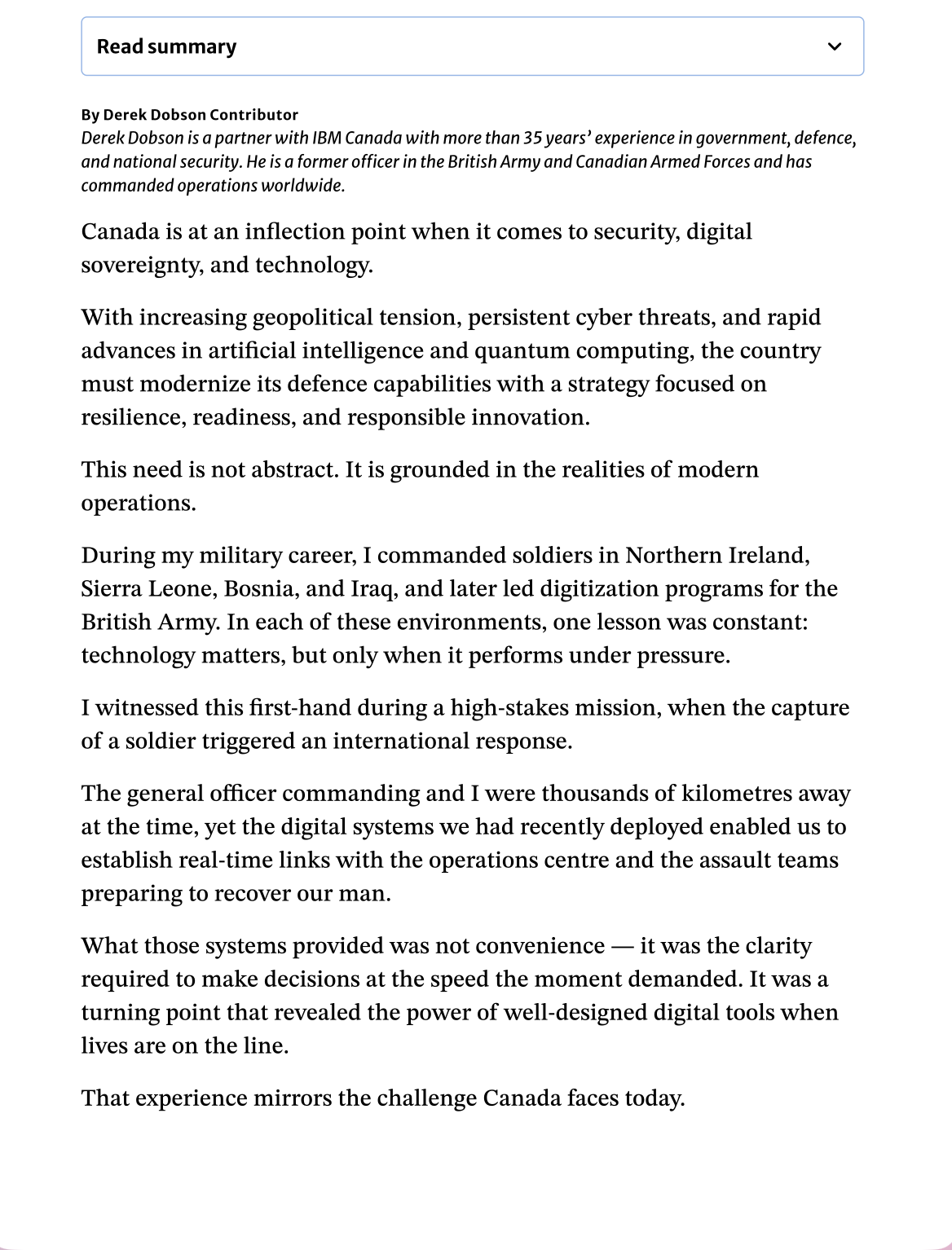
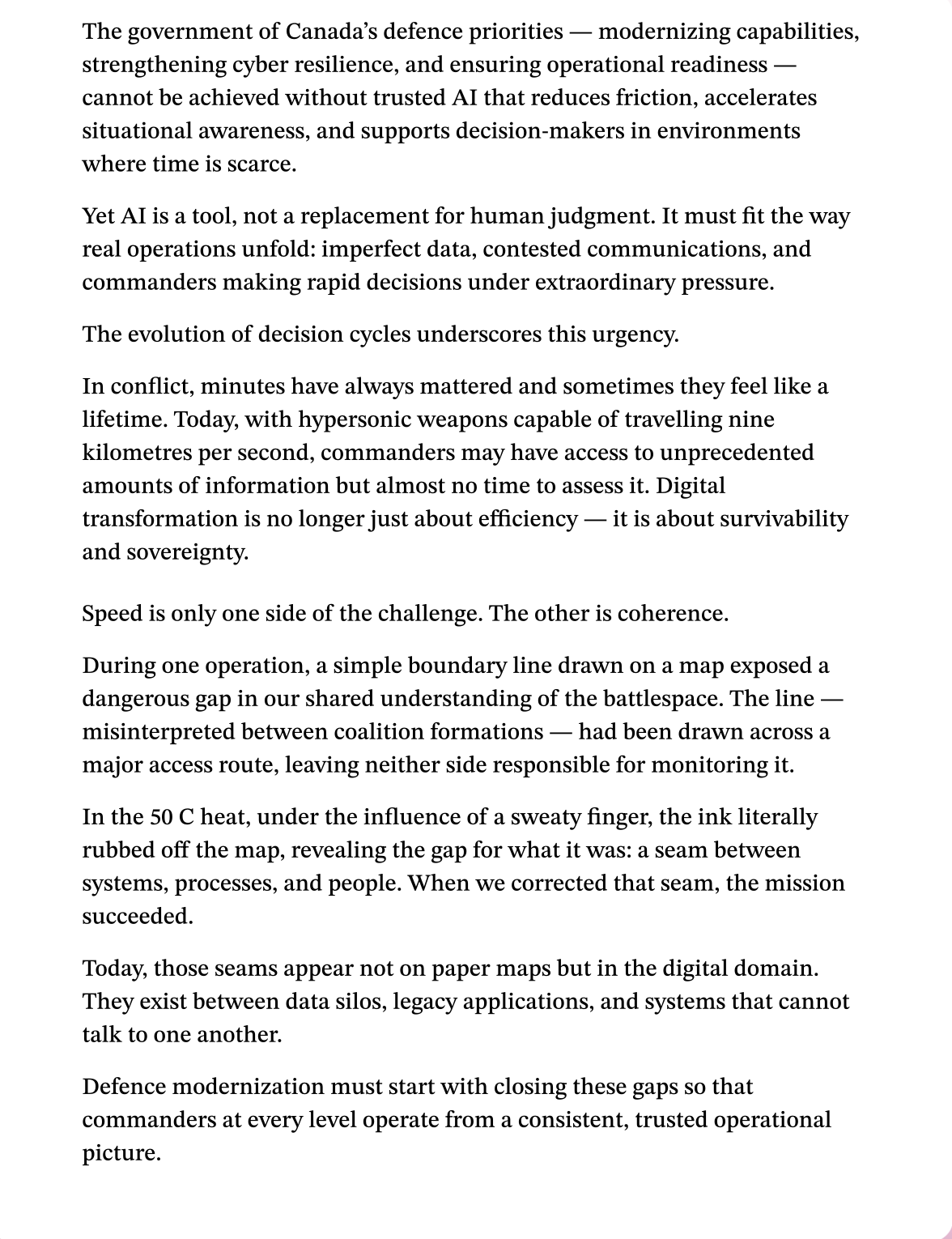
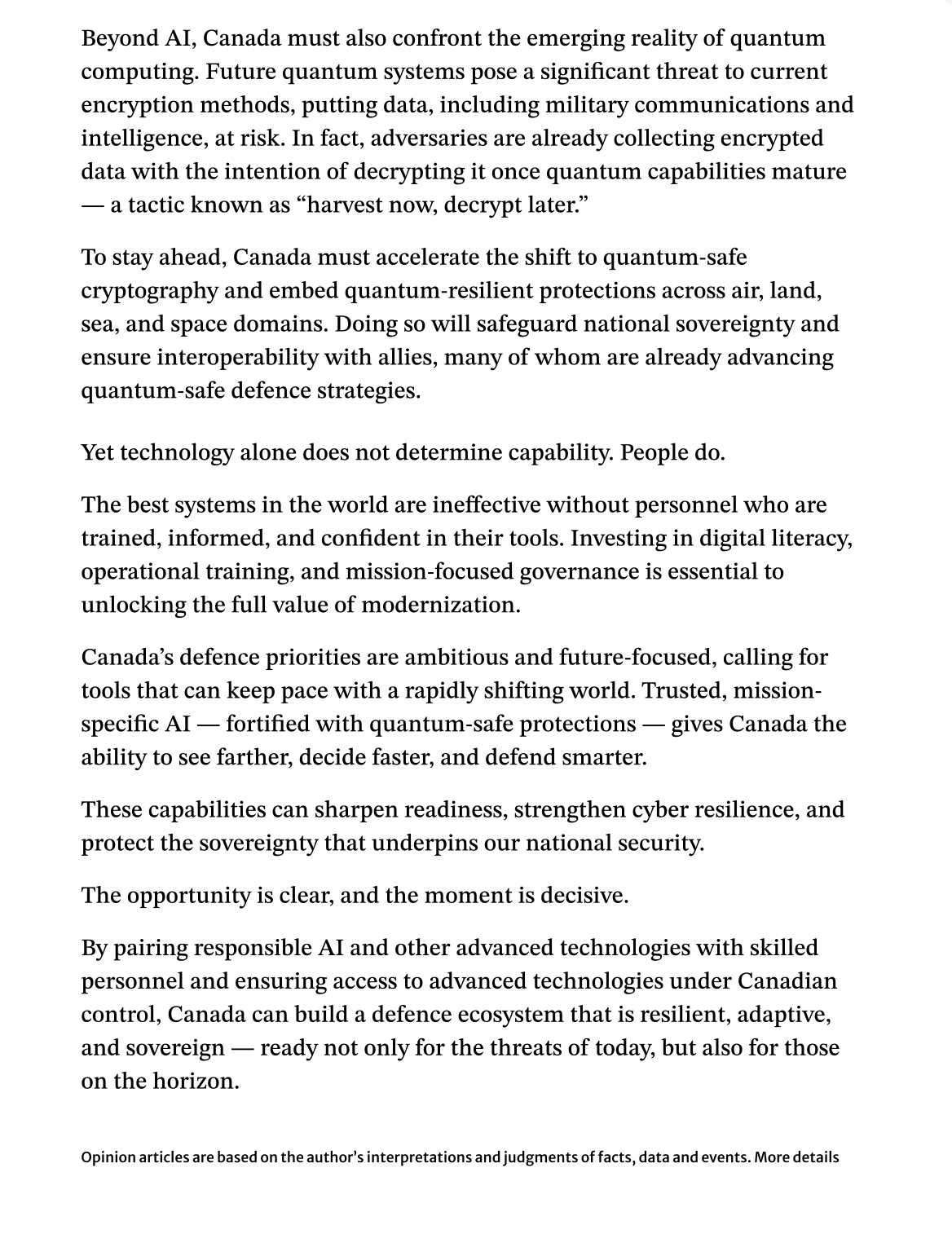
Result: The op-ed ran in the opinion section of the Toronto Star, one of Canada’s largest newspapers. It established the partner as a credible voice on defence modernization at the moment the topic was dominating the national conversation, with a byline grounded in real operational experience, not a sales pitch. The Star’s editor called it an enjoyable read, which is rare praise for a piece about defence technology.